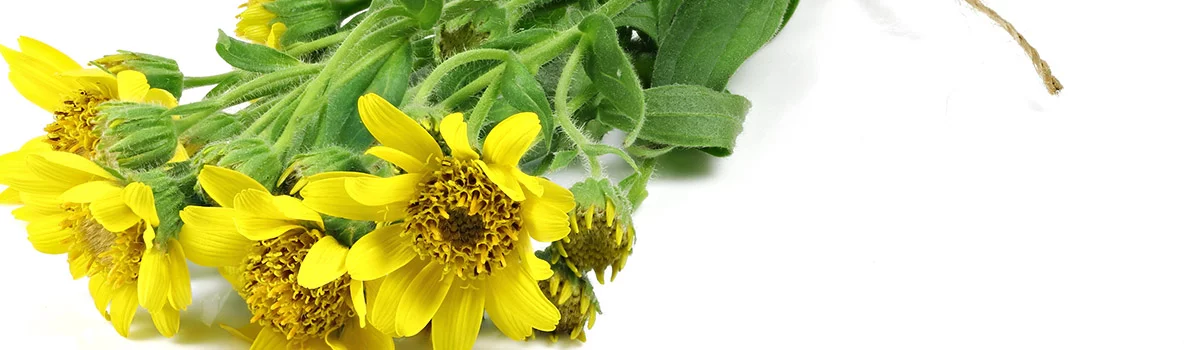
Even in September, arnica is still in bloom. It is considered one of the most powerful natural remedies, known for its exceptional healing properties, particularly for slow-healing wounds and external injuries. In conventional medicine, Arnica montana is often used successfully before and after surgical procedures. Due to habitat loss, true arnica has become nearly extinct in its natural range and is now strictly protected. Today, 31 different species of arnica are known, but only the flowers are used for medicinal purposes. These contain essential oils, bitter compounds, flavonoids, and coumarins.
Active Properties of True Arnica:
Anti-inflammatory
Itch-relieving
Pain-relieving
Circulation-boosting
Antibacterial
Antifungal
Anti-edematous (reduces swelling)
Conditions Treated with Arnica:
Boils
Erysipelas (skin infection)
Phlegmon (deep tissue infection)
Insect bites
Carpal tunnel syndrome
Rheumatic joint pain
Muscle pain
Bursitis (inflammation of fluid-filled sacs in joints)
Arthritis
Contusions and strains
Bruises
Slow-healing wounds
Faster recovery after C-section
Hematomas
Throat infections
Rheumatism
Angina pectoris
Common Forms of Arnica Application:
Tinctures
Infusions for compresses
Arnica oil
Ointments
Arnica Tea Recipe:
Bring one cup of water to a boil and steep one tablespoon of dried arnica flowers for 10 minutes, then strain.
⚠ Important: Arnica tea is for external use only and should never be consumed.