



The immune system of plants also helps people: OPC and Inonotus obliquus (Chaga mushroom)
OPC stands for oligomeric proanthocyanidins. These are substances that occur naturally in plants. They are part of their immune system. The job of OPC is to protect plant germs from oxygen oxidation. We use these properties – to slow down or prevent oxidation – for our bodies.
In addition to grape seed extract, PALJARI’s “OPC + Chaga” also contains the valuable active ingredients of the medicinal mushroom Inonotus obliquus (Chaga), which enhance the medicinally effective properties of OPC.
OPC grape seed extract
A true fountain of youth for health and beauty – and made from grape seeds? OPC is literally on everyone’s lips. And for good reason. Its active ingredient – mainly extracted from grape seeds – has numerous positive effects. Researchers are now continuously providing scientific evidence for the health benefits of grape seed extract. Several studies have shown that OPC demonstrably reduces oxidative stress. This in turn promotes diseases such as Alzheimer’s, cardiovascular disease, arthritis, arteriosclerosis and cancer. It also accelerates the aging of the skin. The reduction in oxidative stress by OPC was confirmed in vital blood analyses by our experts.
Inonotus obliquus (Chaga mushroom)
Ingredients
Inonotus obliquus contains a lot of germanium and zinc. The birch tree on which it grows also releases the substances betulin and betulinic acid to the fungus. All amino acids except isoleucine are contained in Inonotus obliquus, as are polysaccharides, triterpenes, melanin, manganese, boron and iron.
In particular, “Chaga” has an above-average content of polyphenols and thus antioxidants as well as minerals and trace elements.
Use in folk medicine
Inonotus obliquus has been used medicinally for hundreds of years in both Russian and Finnish folk medicine, and it is still traditionally valued as a tonic. In addition, the “Chaga mushroom” is used in many ways because it has a strong antioxidant effect, regulates the immune system, and has anti-inflammatory and pain-relieving effects. Above all, however, it has made a name for itself as a natural remedy for the treatment of all gastrointestinal diseases and also cancer (prevention and therapy). Inonotus obliquus has been on the Russian list of medicinal products since 1858 due to its effect on cancer.
Use in modern mycotherapy
In modern mycotherapy, the “Chaga mushroom” is used primarily in complementary cancer therapy. Its tumor-inhibiting effect has proven particularly effective in the early stages of cancer. But it is also valuable in advanced cancer because it can slow tumor growth. It also helps to contain the formation of metastases. Its soothing effect on pain and the side effects of chemotherapy and radiotherapy is also very beneficial for those affected. In the gastrointestinal tract, Inonotus obliquus has proven effective against ulcers and inflammation, among other things. It is said to have a very beneficial effect on the skin, for example on psoriasis.
What is oxidative stress?
Oxidative stress occurs in the body when the proportion of free radicals exceeds the neutralizing capacity of antioxidants. Oxidative stress is caused by too little antioxidants or by the body’s own processes in which more free radicals are formed.
What are free radicals?
Free radicals are substances with oxygen compounds that are missing an electron. In order to eliminate the chemical instability, free radicals react as quickly as possible with other substances and steal an electron from them. This intracellular process can affect and damage the most diverse areas of the cell, including the genetic material.
What are antioxidants?
Antioxidants, also known as radical scavengers, are chemical compounds that can slow down or prevent oxidation in the body and neutralize free radicals.


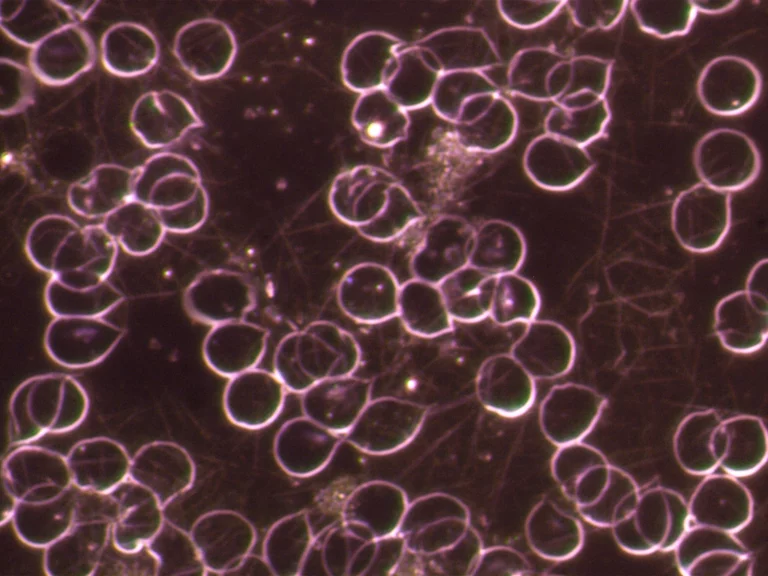
Blood with a healthy environment:
The red blood cells are exposed and
there are no filites (thin threads) in the dark spaces.
Blood with oxidative stress:
The thin threads between the red blood cells,
called filites, are typical when oxidative
stress is present.