The King Bolete Mushrooms
Wild mushrooms are in season now, and among the kings of forest mushrooms is the King Bolete, also known as the Steinpilz. It is flavorful, versatile, and as healthy as all mushrooms.
In late summer and autumn, mushrooms are a culinary highlight for gourmets and health-conscious food lovers. Particularly, the King Bolete impresses with its unusual nutty flavor, while being low in calories, high in protein, and packed with micronutrients.
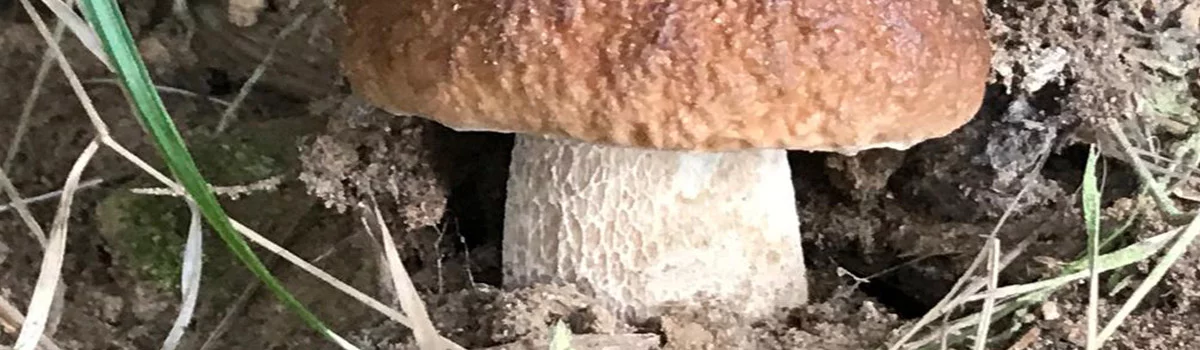
The light brown to brown caps of the King Boletes can reach up to six centimeters thick, with stems up to 20 centimeters long. Characteristically, the stem is light brown and thickens at the base. The King Bolete is also known as the “Herrenpilz” (Gentleman’s Mushroom) and is a mycorrhizal fungus. This means it forms a symbiotic relationship with the root systems of both coniferous and deciduous trees. Therefore, there are pine, oak, or fir King Boletes. It also thrives near deciduous trees like beech, oak, chestnut, and linden. In total, the Boletus edulis can be found in 50 different varieties.
The King Bolete is very high in fiber and, despite its low calorie content (29 calories per 100 grams), is very filling. In terms of nutrients, it is quite generous: its proteins are very similar to animal proteins and easy to digest. It also contains free amino acids and fatty acids, of which about 85 percent are unsaturated or polyunsaturated. With vitamins B2, B5, B9, and vitamin C, it is a true vitamin powerhouse. Additionally, it provides zinc, potassium, sodium, and phosphorus. Recent studies show that, like all mushrooms, the King Bolete is an important source of antioxidants. It contains the highest amount of ergothioneine of all mushrooms. Ergothioneine is a potent antioxidant that helps counteract oxidative stress in the body.